














 Email
Email SMS
SMS Whatsapp
 Web Push
 App Push
 Audience Sync for Ads
 Popups
 Channel A/B Testing
  Control groups Analysis
 Frequency Capping
 Funnel Analysis
 Cohort Analysis
 RFM Analysis
 Signup Forms
 Surveys
 NPS
NPS Landing pages personalization
  Website A/B Testing
  PWA/TWA
 Heatmaps
 Session Recording
 Wix
Wix Shopify
 Magento
 Woocommerce
 eCommerce D2C
  Mutual Funds
 Insurance
 Lending
  Recipes
  Knowledgebase
 Developer Docs
 Product Updates
 App Marketplace
 Academy
 Ebooks
 Case Studies
 Blog
Blog Templates
 Stella
📌 Quick Answer: What is Customer Segmentation Software?
Customer segmentation software is a data-driven tool that divides your customer base into distinct groups based on shared behaviours, demographics, purchase history, or engagement patterns — so your marketing, sales, and product teams can deliver personalised experiences at scale. The right platform combines real-time data processing, AI-powered insights, and CDP integration to help businesses increase retention, reduce churn, and grow revenue without increasing spend.
In eCommerce marketing, companies want to grow their revenue; they have to focus and keep improving their marketing strategy. Converting audience/visitors into customers and leads isn’t an easy task. A business needs to find the right campaign to grow revenue.
To increase your company’s revenue, you need to do segmentation. Customer segmentation software in eCommerce businesses makes you understand the customers and help you target them in a better way.
Contents
What is Customer Segmentation?
Customer segmentation is a method or process that divides customers into groups and sub-group having the same characteristics or patterns. These characteristics can be the customer’s age, country, gender, climate, or activities.
Segmentation allows marketers to prepare better or more efficient strategies.
The segmentation process gives target-based opportunities to the marketers and growth to their business.
Customer Segmentation helps you target your customers in more personalized and meaningful ways, making it easier for you to convert them into paying clients.
With automated rules and integration with CRM, you can target customers with personalized messages that resonate with the right people.
Types of Customer Segmentation
The customer segmentation process starts with the gathered information from the customers. All the information or data of the customer you collected help for segmentation is used by the tool.
You have to divide customer data based on their characteristics. You can divide customers into many groups according to your customer. There are no set rules for that as companies and as well as customers vary.
The main features or characteristics of customers that help form groups for segmentation are four. Customer segmentation is usually divided into four parts. These are the following: –
1. Demographic segmentation:
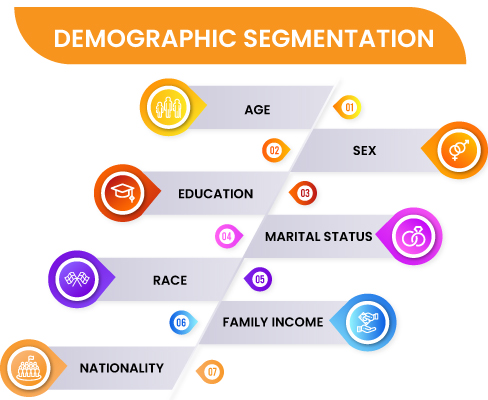
Demographic segmentation divide customers based on their demographic information. It divides customers into groups that share the same characteristics. It is not specific to one individual.
These characteristics include:
- Age
- Sex
- Education
- Marital status
- Race
- Family income
- Nationality
2. Geographic segmentation:
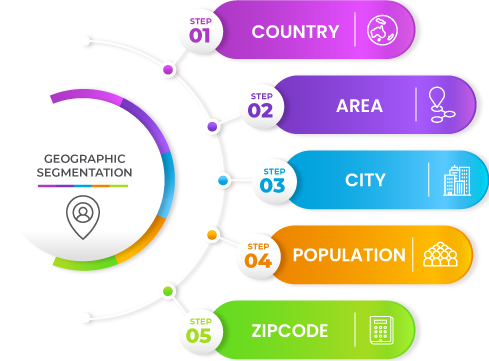
Geographic segmentation split customers based on their location, area, population, etc.
These characteristics include:
- Country
- Area
- City
- Population
- Zipcode
3. Behavioral segmentation:
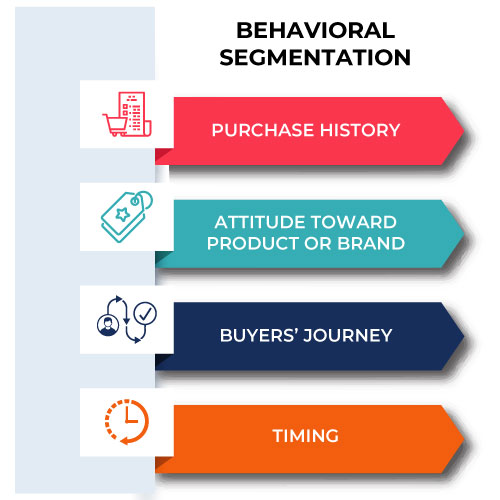
Behavioral segmentation divide customers based on their activity on the website.
These activities include:
- Purchase history
- Attitude toward product or brand
- Buyers’ journey
- Timing
4. Psychographic segmentation
Psychographic segmentation divide customers based on their psychographic traits like non-physical attributes.
These traits include:
- Habits
- Hobbies
- Political views
- Lifestyle
- Social Status
Why Customer Segmentation is Necessary
Customer segmentation helps you connect with your customers more by targeting them individually and fulfilling their demands and requirements in a more personalized way. Companies can personalize their marketing while staying efficient by understanding their needs and requirements.
Benefits of Customer Segmentation
- Increase Customer Retention: – Prioritizing your current existing customers is important. Customer segmentation helps you in personalized messages that will gain a feeling of being valued by your existing customers, and it will help you retain them easily.
- Create brand awareness: – Segmenting your customers will make your customers well aware of your brand, and your efforts will increase your goodwill and create brand value as more personalized.
- Improve Customer Relationship: – Customer segmentation will improve your relationship with your customers. Communicate with your customers more, it will make you aware of the new changes & opportunities.
- Price Optimization: – Segmenting your customers according to their expenditure, you can analyze their spending limits, which will help you understand their social and financial status.
- Improves Channel of Distribution: – It will improve your distribution channel. When you know the right number of customers you can direct the right distribution channel.
- Improve the efficiency of advertisements: By identifying the right customer for a particular campaign, you can align with the specific customer needs. This will increase conversion rates and improve the efficiency of advertisements.
Features of a Customer Segmentation Software
- Organized: – Good segmentation software holds all your customer information, from subscription information to sign-in dates. The right software must handle the information in an organized way to get a clear view of your customer’s traits.
- Customization: – A great customer segmentation tool will allow you to customize metrics, like customer satisfaction, across different customer segments. You need more flexibility in segmentation as you understand more and experience. For a specifically tailored software feature, some companies might opt for IT outsourcing to Latin America and similar IT hubs, while others look for an all-in-one solution among the tools available on the market.
- Visibility: – Customer segmentation software must have visibility. A good segmentation provides you with easy access to all the data. So that it can get all the information easily and you can improve marketing strategies.
- Scalable: – Good segmentation software should be simple to use, and it should be perfect for both small-scale businesses and for large businesses. It should be robust enough to scale with you as your company grows.
- AI & Predictive Segmentation: – The best modern customer segmentation platforms go beyond rule-based groups. Look for software that uses machine learning to automatically identify high-value segments, predict churn risk, forecast customer lifetime value, and update segment membership dynamically as customer behaviour changes in real time.
Customer segmentation software comparison (2026)
Before diving into the full reviews, here is a quick-reference comparison of all 8 tools covered in this guide. The CDP Integration column shows whether the tool natively connects to a Customer Data Platform for unified customer profiles and cross-channel activation.
| Software | Best For | Starting Price | CDP Integration |
|---|---|---|---|
| Nvecta⭐ Recommended | All-in-one eCommerce & omnichannel segmentation with built-in CDP | Contact for pricing | Yes — native CDP |
| Google Analytics | Free website behaviour segmentation | Free | Partial (via GA4 integrations) |
| Mailchimp | Email-focused segmentation for SMBs | Free plan; paid from $13/month | Partial (via third-party connectors) |
| Adobe Analytics | Enterprise real-time analytics & reporting | Custom pricing | Yes — via Adobe Experience Platform |
| Segment (Twilio) | Data unification & CDP for multi-product businesses | Free up to 1,000 MTUs; custom enterprise | Yes — native CDP |
| Sprout Social | Social media audience segmentation | From $99/user/month | No |
| Klaviyo | Predictive segmentation for eCommerce brands | Free up to 250 contacts; paid from $20/month | Yes — native CDP |
| HubSpot | Free CRM segmentation for B2B & SMBs | Free CRM; Marketing Hub from $15/month | Partial (via HubSpot Operations Hub) |
8 Best Customer Segmentation Software & Tools
1. Nvecta
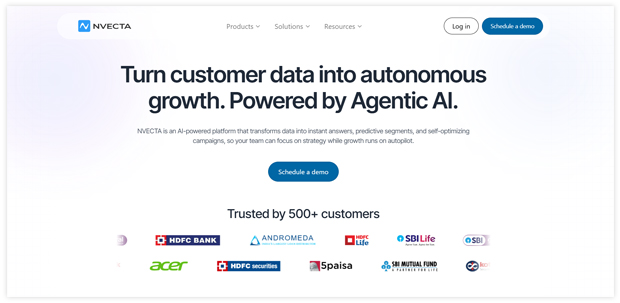
Nvecta segmentation tool segments users according to their behavior, geography, and technology. Using our software you can get the all valuable insight about users and make your strategies according to them.
Features:
- Our software provide you with the user’s detailed information like their personal information, devices they use, reachability, and user timeline. With all this detailed data it categorizes users into segments.
- With the help of detailed analytics, you can understand your segment and plan your strategies. Notify visitors using Heatmaps, A/B testing, and other tools to track and analyze users’ behavior.
- It tracks web data history.
Pricing: To get information about pricing, contact us.
2. Google Analytics
Google Analytics is a very good customer segmentation tool for companies as it is used to track website activity. It monitors consumer online behavior and action.
Google Analytics tracks website activity such as how long a customer is on-site, where the customer clicks on the web page, and individuals’ bounce rate. It gives you information about the website traffic data.
These metrics will help you improve marketing campaigns, drive website traffic and retain visitors.
Here are a few features of Google Analytics as a segmentation tool:-
- Google Analytics helps you to easily and quickly define customers’ attributes and behavior so that segmentation becomes easy and you can analyze it better.
- There is also a good feature in Google Analytics that it has the ability to apply a host of pre-defined and completely customizable segments.
- You can also create your own segments in which you can add conditions according to yourself.
Pricing: Free
3. Mailchimp
Mailchimp has a segmentation tool for companies seeking to segment their email marketing campaigns. According to Mailchimp, with its tool, segmented mail marketing campaigns result in an average of 23% higher open rates and 49% higher click-through rates than unsegmented campaigns.
Here are the features of Mailchimp:-
- Mailchimp segmentation tool makes it easy for you to send the right messages to the right audience that matters to them.
- Mailchimp uses options that you need to filter your audience data like:-
- Sort contacts based on data you have collected, like location or signup source.
- Target based on customer behavior
- Use your unique insights info to create customer segments
- Use predictive insights to better target customer purchase behavior.
- Mailchimp has ready-made marketing segmentation based on campaign activity, purchase history, and more so that you can start targeting right away.
- You can create a segment and set conditions to filter contacts based on the information that you of your audience. Also, you can include 1 to 5 conditions in each segment.
Pricing: On request
4. Adobe Analytics
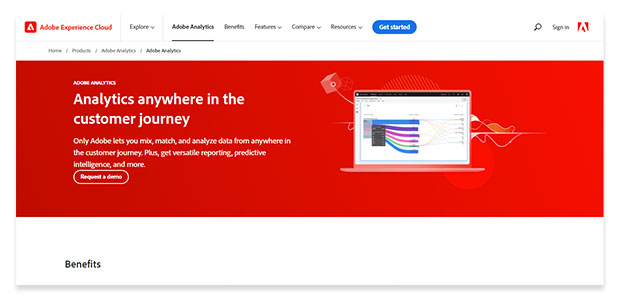
Adobe Analytics is perfect for providing an insights view of how customers and leads are interacting with your brand. It offers services like advanced reports and the ability to read data in real-time.
Features:
Adobe Analytics is perfect for providing an insights view of how customers and leads are interacting with your brand. It offers services like advanced reports and the ability to read data in real-time.
- Adobe Analytics lets you combine & match, and analyze data from anywhere in the customer journey, also get versatile reporting, predictive intelligence, and more.
- Adobe Analytics makes it easy to enter various data types to determine the optimal way to market and remarket to your audience segments.
- It automatically uncovers key characteristics of the segments that are driving your company’s KPIs.
Pricing: On request
5. Segment
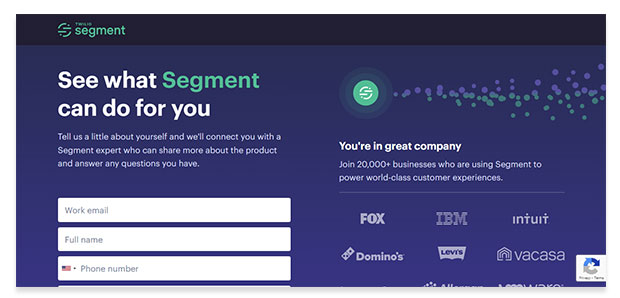
The segment is the tool for customer data platform (CDP) that helps you collect, clean, and control your customer data. Combine your disparate data sources into segments and get a comprehensive view of your customers.
It is good at managing enterprise-scale clients and is an excellent choice for companies with numerous products or services. It breaks down data silos to help businesses make their customer engagement more personalized, timely, and impactful across channels.
Features:
- It combines your disparate data sources into segments and get a comprehensive view of your customers.
- It is good at managing enterprise-scale clients and is an excellent choice for companies with numerous products or services.
- It breaks down data silos to help businesses make their customer engagement more personalized, timely, and impactful across channels.
Pricing: On request
6. Sprout Social
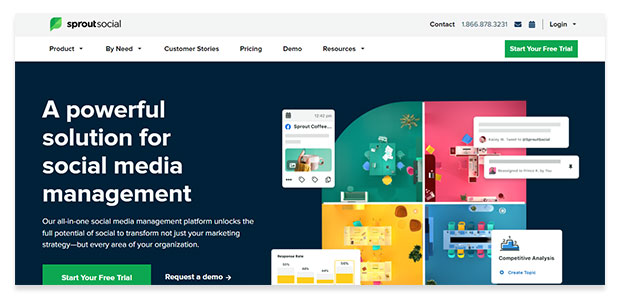
Sprout Social uses social media insight data to help your company focus on KPIs. Sprout’s Analytics tools speed up data collection and distribution. It creates audience segments on social media based on:
- Relationship status
- Interests
- Age
- Location
- Gender
- Education
- Business size
- Industry
Features:
- Sprout can send out targeted ads to each segment you’ve created.
- It is the most helpful tool for companies who want to bring the advantages of audience segmentation to their social media campaigns.
Pricing: Start at $99 per user per month.
7. Klaviyo
Klaviyo is a leading customer segmentation and marketing automation platform built specifically for eCommerce brands. It combines a native CDP, real-time behavioural data, and AI-powered predictive analytics to help online retailers segment customers with remarkable precision — going far beyond basic demographics to target based on predicted lifetime value, churn risk, and next purchase date.
Features:
- Predictive analytics available at every pricing tier — forecast customer lifetime value, churn probability, and expected next order date to build forward-looking segments rather than just historical ones.
- Real-time segment updates — segment membership updates dynamically as customers take actions (browse, purchase, abandon cart), ensuring your campaigns always reach the right person at the right moment.
- Native CDP with 350+ pre-built integrations — connects directly with Shopify, WooCommerce, Magento, and major eCommerce platforms, pulling purchase history, product interactions, and site behaviour into a unified customer profile.
- Flow-based automation — use segments to trigger personalised email, SMS, and push notification flows without needing a separate marketing automation tool.
Pricing: Free plan available for up to 250 contacts; paid plans start from $20/month scaling with contact list size.
8. HubSpot
HubSpot is one of the most widely used CRM and marketing platforms globally, and its free CRM provides a strong entry point for businesses looking to start customer segmentation without upfront cost. Through its contact lists, smart lists, and Marketing Hub, HubSpot allows teams to segment customers across the full funnel — from first touch to post-purchase loyalty — making it particularly well-suited to B2B companies and SMBs managing longer sales cycles.
Features:
- Smart lists with automatic contact segmentation — create dynamic segments that update automatically based on contact properties, behaviour, deal stage, or form submissions, without any manual maintenance.
- Contact and company segmentation — segment both individual contacts and company accounts by industry, size, revenue, lifecycle stage, and engagement score, making it ideal for account-based marketing.
- Behavioural segmentation via email and website activity — track email opens, clicks, page visits, and CTA interactions to build segments based on engagement level and content interest.
- AI-powered predictive lead scoring (Marketing Hub Professional) — automatically scores contacts by their likelihood to convert, allowing sales and marketing teams to prioritise outreach to the highest-value segments first.
Pricing: Free CRM with basic segmentation available at no cost. Marketing Hub starts from $15/seat/month (Starter); Professional plan with AI features from $890/month.
How to choose the right customer segmentation software
With dozens of platforms available, choosing the right customer segmentation software comes down to matching the tool’s strengths to your specific business goals, data maturity, and team capabilities. Here are the four most important factors to evaluate.
1. Define your primary goal first
Different tools are optimised for different outcomes. If your goal is reducing churn, look for platforms with predictive segmentation and customer health scoring. If your goal is increasing average order value in eCommerce, prioritise tools with purchase-behaviour segmentation and product recommendation integration. If you are a B2B team focused on pipeline, a CRM-native segmentation tool like HubSpot will serve you better than a pure analytics platform.
2. Assess your team’s technical skill and data readiness
Some platforms require data engineers to set up pipelines and maintain segment logic — others offer no-code visual builders that marketing teams can operate independently. Be honest about your team’s capacity. If marketers need to create and update segments daily without IT support, prioritise platforms with drag-and-drop segment builders, pre-built templates, and automated segment refreshes.
3. Check CDP and CRM integration compatibility
Segmentation is only as good as the data feeding it. A tool that cannot connect to your existing CRM, eCommerce platform, or data warehouse will produce incomplete segments. Check whether the platform offers native CDP functionality — meaning it can unify customer data from multiple sources into a single profile — or whether it relies on third-party connectors that can introduce data lag and inconsistencies. For businesses running omnichannel campaigns, native CDP integration is a strong advantage.
4. Evaluate AI and predictive features for future-proofing
Rule-based segmentation — manually grouping customers by age or location — is table stakes in 2026. The platforms delivering the most measurable ROI are those using machine learning to predict which customers will buy next, which are at risk of churning, and which segments have the highest lifetime value potential. When evaluating tools, look specifically for predictive LTV scoring, churn probability modelling, and dynamic segment membership that updates automatically as customer behaviour evolves.
Once you understand the types and benefits of segmentation, the next step is choosing the right tool to implement it. See our detailed comparison of the best customer segmentation software — covering features, pricing, and CDP integration for 8 leading platforms.
CONCLUSION
Segmentation is used to create targeted marketing strategies for the companies. The main goal of customer segmentation is to understand customers’ traits, get an insightful view of customers, and analyze it to improve marketing.
The segmentation tools show you a clear picture of every customer from start to end to target your leads more efficiently, and these segmentation tools make it easy for you to do so.
Customer Segmentation is important for building your marketing strategies. Nvecta offers segmentation tools that help you grow your business. To know more about our tool, schedule a demo.
FAQ’s
1. Customer segmentation is usually divided into four parts.
1. Demographic segmentation
2. Geographic segmentation
3. Behavioral segmentation
4. Psychographic segmentation
2. Here are a few benefits of customer segmentation:-
1. Increase Customer Retention
2. Create brand awareness
3. Improve Customer Relationship
4. Price Optimization
5. Improves Channel of Distribution
3. We have listed the 8 best Customer Segmentation software
1. Nvecta
2. Google Analytics
3. Mailchimp
4. Adobe Analytics
5. Segment
6. Sprout Social
7. Klaviyo
8. HubSpot
