














 Email
Email SMS
SMS Whatsapp
 Web Push
 App Push
 Audience Sync for Ads
 Popups
 Channel A/B Testing
  Control groups Analysis
 Frequency Capping
 Funnel Analysis
 Cohort Analysis
 RFM Analysis
 Signup Forms
 Surveys
 NPS
NPS Landing pages personalization
  Website A/B Testing
  PWA/TWA
 Heatmaps
 Session Recording
 Wix
Wix Shopify
 Magento
 Woocommerce
 eCommerce D2C
  Mutual Funds
 Insurance
 Lending
  Recipes
  Knowledgebase
 Developer Docs
 Product Updates
 App Marketplace
 Academy
 Ebooks
 Case Studies
 Blog
Blog Templates
 Afreen Sheikh
To stay competitive in the market, businesses need customer data and its complete understanding. Just collecting data from multiple sources is not enough. It is important to connect such data and then engage customers. Businesses often struggle with scattered data and are unable to form a complete picture of their customers. This severely affects the quality of marketing decisions.
This is where a customer data platform can be used to bring all customer information together and process it to get a unified view of the data. A CDP software is a cluster of tools that enable brands to create a personalized and constent experiences for their customers. It personalizes experience in real time across all marketing channels used and later gives insights to help in decision-making. It gives a better understanding of customer behavior which contributes to optimized communication that feels relevant and timely.
As customer expectations rise, customers need seamless journeys and meaningful engagement at every touchpoint. Using CDP, businesses can make data-driven decisions to meet customer expectations and enhance customer satisfaction.
This guide explains what a Customer Data Platform is, the features it offers, the benefits it provides, the types available in the market, and how NVECTA delivers a powerful and efficient CDP solution for expanding business needs.
Contents
What Is a Customer Data Platform (CDP)
A customer Data Platform (CDP) is a software system that centralizes all the customer information from every offline and online source to organize it into a single unified customer profile view.
This consolidated data is used by teams such as marketing, sales, and customer experience.
CDP provides businesses with a structured manner to comprehend customer journeys and design highly personalized and relevant experiences across communication channels.
In simple terms, it converts raw, scattered customer data into meaningful insights, helping brands improve engagement and overall growth outcomes.
Core Functions of a CDP
Data Collection
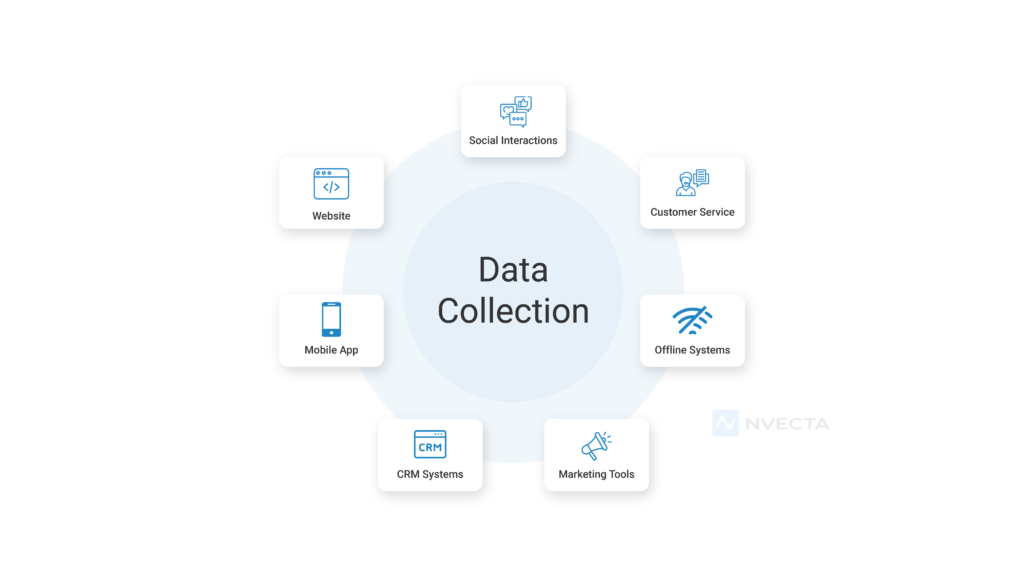
The primary function of a CDP is to gather customer data from all touchpoints and bring it into a streamlined system. It mainly collects data from websites, CRM systems, mobile apps, marketing tools, offline systems, social interactions, customer service systems, etc.
This customer data is collected in real time and processed in accordance with the latest customer actions and preferences. This allows businesses to understand customer behaviour as it happens.
Identity Resolution
Identity Resolution is a process of connecting customer data that appears across digital and offline channels and finding whether those scattered details belong to the same person. It provides a comprehensive view of each customer, eliminating duplicate records.
360-degree customer view
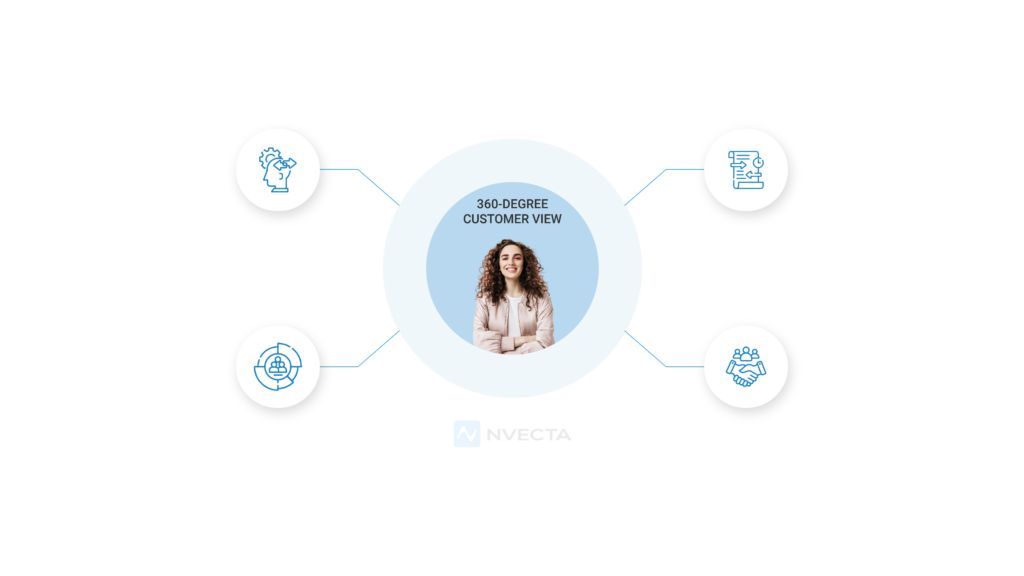
CDPs work to unify customer data and consolidate a variety of customer information to form a 360-degree customer view.
It includes customers’ behavioural patterns, demographic attributes, transaction history and engagement levels.
Such a level of data unification helps businesses to find out customer expectations and deliver better experiences.
Segmentation
Segmentation is the process of dividing customers into groups based on similar behaviours or preferences.
These segments are dynamic and update automatically based on customer actions. Such grouping relies on purchase history, lifecycle changes, current interest, engagement levels and predictive analytics.
The advanced segmentation feature helps businesses to target the right customers at the right moment.
Activation and Orchestration
Once the data is processed and segments are created, the data is activated through a customised campaign across marketing channels such as email, SMS, push notifications, WhatsApp, in-app communications, on-site messages, and other digital ads.
Also, through orchestration, CDPs make sure that each customers receive the appropriate message via a suitable channel at the most apt time.
Analytics and Insights
CDPs enable tracking the full customer journey and understanding campaign performance. They offer a full-fledged dashboards that show customer journeys, campaign effectiveness, funnel results, etc.
It also provides predictive analytics like churn probability and purchase likelihood, fostering proactive decision-making and optimizing marketing efforts.
Key Features of a CDP Software
Data Integration
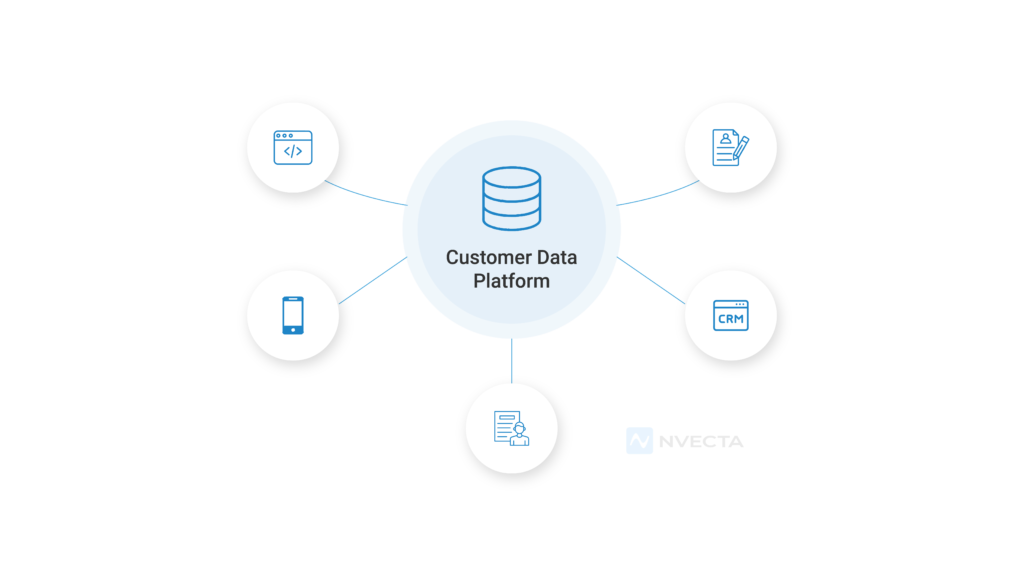
CDPs seamlessly integrate raw customer data from multiple sources, such as websites, signups, mobile apps, and CRMs.
This data is captured in real time, allowing CDPs to update customer profiles based on the most recent actions, behaviours, or preferences. This feature establishes a foundation for accurate insights and personalised engagement.
Real-Time Data Tracking
Real-time tracking provides instant insight into customer behaviour/actions. It could be about browsing a product, abandoning the cart, or completing a purchase.
A CDP tracks such actions in real time and triggers timely actions, such as a personalised email, a push notification, or an offer. Such a level of responsiveness increases engagement, reduces drop-offs, and improves the experience.
Customer Profiling
Creating individual customer profiles from fragmented data across various touchpoints is a primary feature of CDPs.
All static and dynamic information is stored in these customer profiles to better understand customer behaviour and lifecycles. CDPs apply identity resolution to merge the profiles and remove duplicates.
Segmentation & Targeting
Segmentation facilitates creating customer groups on the basis of their behavioural patterns, purchase history, demographics, location, predictive insights, etc.
This helps in crafting targeted campaigns and delivering tailored, relevant messages suitable for a group. This targeting leads to increased conversions and stronger customer relationships.
Omnichannel Activation
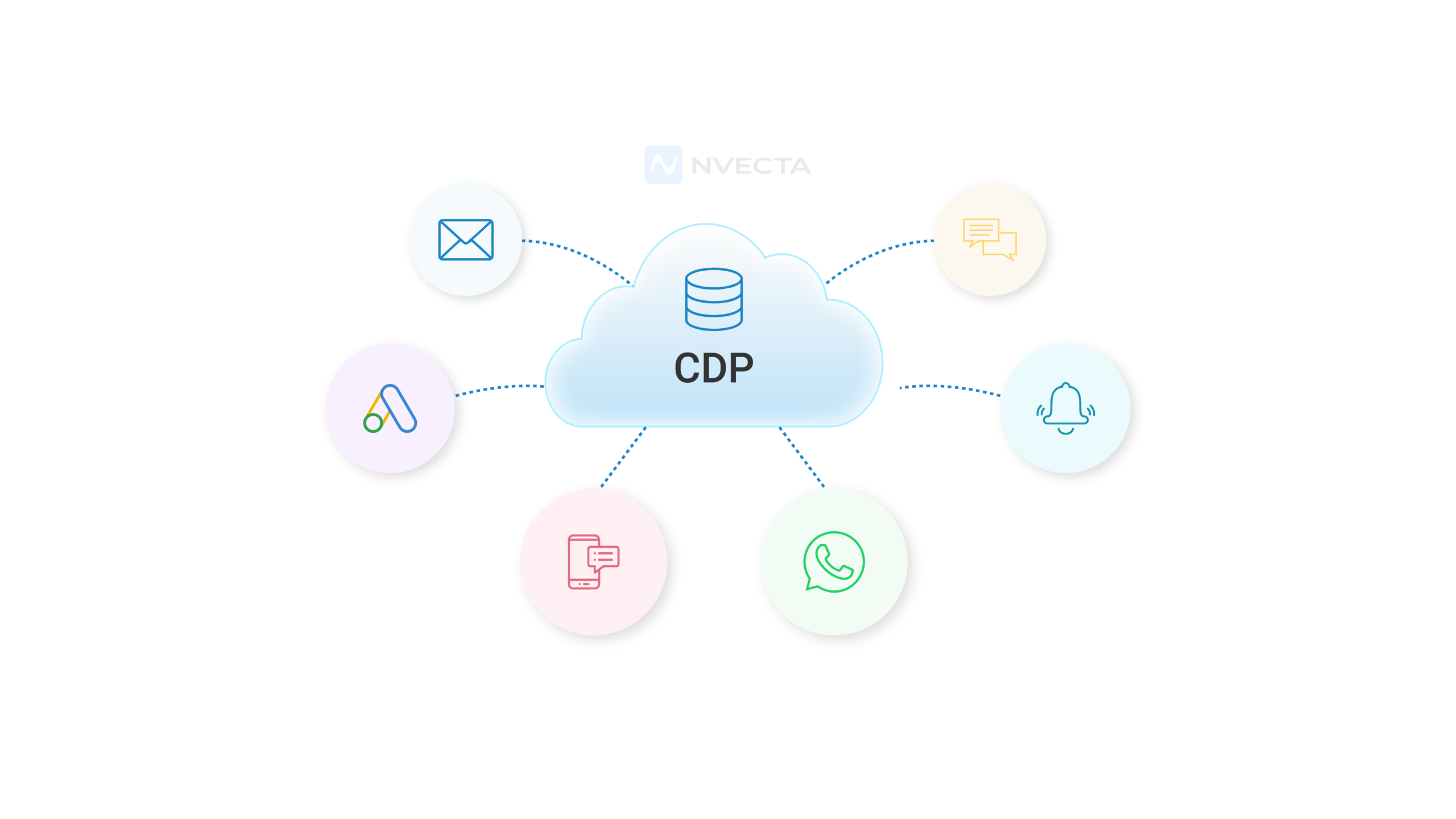
CDPs integrate smoothly with marketing channels such as email, SMS, Push notifications, WhatsApp on-site messaging, in-app messaging, and other digital advertising platforms. This ensures consistent messaging that feels connected and more personal.
Analytics & Insights
CDPs are equipped with analytics capabilities that help businesses monitor customer journeys, evaluate campaign performance, and track engagement metrics.
Nowadays, analytics use AI-driven models to generate insights that later help businesses in making data-backed decisions. This helps strengthen ROIs.
AI-Powered Predictive Intelligence
CDPs use AI-driven analytics to predict customer actions, including churn risk, purchase probability, product preferences, and future value.
Such predictive analytics aid brands in taking timely actions such as delivering timely offers, prioritising high-value customer and crafting proactive retention/engagement strategies.
Data Governance and Privacy Management
Using customer data comes with a responsibility for their privacy. CDPs provide governance capabilities to the business, prioritising compliance with global privacy standards such as GDPR and CCPA.
They use consent forms, data usage permission and user preferences to maintain compliance. Such safer use of customer data builds trust and reduces legal risks.
No Code Workflow Automation
CDPs work with a no-code workflow, which means a marketer does not need any technical skills to create campaigns.
It offers features that enable automated journeys through a simple visual builder. Marketing teams can easily design customer flows, triggers, conditions and messages through an intuitive interface. This helps launch campaigns quickly, test new ideas, and reduce extensive campaign planning.
Benefits of Using Customer Data Platform Software
Improved Personalisation and Customer Experience
As CDPs handle customer data systematically, they empower businesses with a deeper understanding of each customer, including their behaviour, preferences, and recent interactions.
With such insights, highly relevant and intent-aware messages can be delivered that are personalised.
Brands that provide personalisation are most likely to be chosen by customers. They feel valued, and an emotional connection is built. This connection is necessary for business growth.
Increased Marketing Efficiency and ROI
With dynamic segment and A/B testing features, marketers can send the right message at the right time to their audiences. This makes every campaign effective.
CDPs automate every task that used to be manual. Also, it does personalisation and send of campaign at scale.
This reduces waste on acquisition costs and ad spend, and as a result, businesses can see better returns on their marketing investments.
Improved Customer Retention and Lifetime Value
With consistent messaging and personalised experiences, businesses acquire loyal customers.
CDP utilises customer behavior patterns and predicts in advance about disengagement, drop-offs and churn risks to engage customers with timely offers and customized content.
This helps increase retention rates, as existing customers are quickly engaged.
Real-Time Decision Making
CDPs provide businesses with live customer data access, which helps with data-driven decision-making.
Real-time insights help in engaging customers quickly- it could be recommending products during active browsing or a discount code after a cart abandonment.
Marketers can monitor insights and make smarter decisions to create more impactful experiences.
Streamlined Compliance with Data Regulations
A CDP facilitates compliance by maintaining customers’ consent and preferences. This helps ensure compliance with global data privacy laws.
CDP ensures full transparency, as businesses gain full control over how their customer data is collected, stored, and used. With this, they gain customers’ trust and reduce the risk of legal issues.
Common Challenges With Customer Data Platform Software
CDPs are a set of functions, and implementing them is quite challenging. Therefore, a business must identify its goals and study the challenges in advance, whether or not they are real. Understanding the challenges to prepare them for a smoother CDP adoption.
Data Quality and Integration Complexity
It is quite challenging to manage incomplete or inconsistent data when it comes from multiple sources, such as websites, apps, CRMs, and offline systems.
This creates difficulties, including mismatched formats, duplicate records, and missing fields, making it hard to build accurate customer profiles.
Businesses can only overcome this issue with CDP tools equipped with automated data cleansing to bring standardization.
Organizational Alignment
A successful CDP adoption relies on collaboration with marketing, IT, data teams, and customer service.
When roles and responsibilities are vaguely defined, workflow slows, and teams struggle to manage customer data effectively.
There should be defined processes, clear ownership and internal coordination to improve CDP performance.
Privacy and Consent Management
As third-party cookies shift away and privacy regulations grow, consent management becomes essential for any business.
Choose a CDP that can manage consent preferences and apply them across all channels of communication A healthy consent framework safeguardscustomer trust and helps uphold compliance.
Implementation Timeline and Resource Requirements
Implementing CDP in an organization is not an instant process; sometimes it takes months to map data and integrations alongside ongoing optimization.
It may require skilled resource persons such as analysts, data engineers, and marketing personnel. Understanding these timelines helps set realistic expectations and ensures proper resource planning.
How to Choose the Right CDP for Your Business
Businesses must choose the right customer data platform as it directly affects data handling, personalization and overall marketing performance.
Below are factors to help you evaluate a CDP and determine whether it aligns with your business goals.
Integration Capabilities
Ensure the CDP software can easily integrate with your existing tech stack, such as CRMs, email marketing tools, and analytics platforms.
If your business uses other platforms like salesforce, consider selecting a CDP that supports smooth email integration and compatibility to streamline data and campaign execution.
A smoother integration saves time and removes data silos, ensuring better communication across systems. With this, businesses can work more efficiently with a unified customer data flow.
User-Friendly
The CDP should offer an intuitive, easy-to-use interface that lets your team navigate the platform effortlessly.
A simple drag-and-drop feature reduces the learning curve and helps teams use the system without technical training. This assures speedy adoption and consistent usage across the organization.
Customization
A CDP must allow you to customise customer segments, workflows, and related features to suit your business needs.
There should be a room for flexible customization that aligns with your processes and customer base. This helps a business deliver more relevant experiences and boost engagement aligned with its specific business goals.
Cost Effectiveness
A cost-effective CDP offers a balanced mixture of powerful features and affordability. Consider the pricing in relation to the features, platform scalability, and your data volume.
Find a pricing structure that provides enough features in your budget and offers a good return on investment.
Vendor Support
A good CDP must provide onboarding support and strong user support to make adoption easier.
There should be a responsive vendor team that assists with troubleshooting and ensures your business fully utilises the platform. Reliable support helps resolve challenges and improves overall effectiveness.
Real-Time Processing for Instant Personalisation
Real-time data processing is an essential feature that ensures customers’ actions are captured at the moment they occur.
This will help brands respond quickly. It could be a product recommendation, a cart reminder, or a triggered message. Such instant activation increases engagement and makes customer interaction relevant.
Scalability for Growing Data
A CDP must be scalable to accommodate growing business data. As customer interactions increase, more customer data is accumulated.
Scalable architecture supportsa larger volume of customer datasets, higher traffic and expanding customer journeys without affecting performance.
Considering this will help handle long-term data demands and create opportunities for future growth without hindrance.
Security and Compliance Features
A CDP must prioritize compliance with global regulations. Stronger consent and permission controls help safeguard customers’ sensitive information. This eliminates compliance-related risks.
Cost and ROI for Long-Term Value
Assessing a CDP’s long-term value is a crucial choice. A CDP should give measurable returns such as improved conversions, better retention and personalization.
Just evaluate both cost and expected ROI to find a better system that supports your business strategy.
Why Use NVECTA as Your CDP?
NVECTA is a smart CDP Solution that provides perfect data-handling and personalization capabilities that help businesses turn raw customer data into actionable insights.
It has advanced features to manage data, including unified customer profiles, omnichannel marketing, segmentation, predictive analytics, journey orchestration, automated campaigns, etc.
Best Features of NVECTA CDP
NVECTA’ Customer Data Platform (CDP) offers a variety of features to engage customers in a meaningful way. Let us study each feature in detail-
Single Customer View
This ultimate feature of NVECTA helps its businesses consolidate customer data from multiple touchpoints and create a unified profile for each customer.
Users can track their customers across devices, sessions, and platforms, including mobile, web, and social media.
Instead of getting confused by scattered information across different places, you can view clear data for an individual customer. This approach simplifies personalization and delivers relevant customer experiences.
360° User Profiles
This feature provides a 360-degree customer profile view, which is like a digital passport for a customer. It collects all the necessaryinformation about them in one place, like-
- Behavioral data: How customers interact with your with your brand over website or app (like pages visited or clicks).
- Demographic data: Basic info like age, location, and gender.
- Transactional data: What they’ve purchased.
This comprehensive profile helps you understand what your customers want and how they behave, so you can create more targeted strategies and experiences.
Smart Segmentation
NVECTA has advanced segmentation capabilities, including powerful segment filters and AI-driven predictions to help send the right message.
With this, businesses can create highly specific customer groups based on real-time data such as behaviour patterns, engagement levels, past purchases, demographics and custom attributes.
This helps in offering tailored messaging to each segment’s interests and actions. Also, its predictive tool improves targeting by foreseeing future customer behavior like who is likely to make a purchase, who could possibly leave or unsubscribe, high-value customers who return frequently or make larger purchases.
It has advanced predictive capabilities, such as identifying customers more likely to engage with upcoming campaigns.
Through such insights, brands can take measures such as a special discount or sending emails or WhatsApp messages to re-engage customers.
Real-Time Data Processing
NVECTA processes every customer action in real time, so customer groups can be updated, and campaigns can be triggered. Let’s say a customer saves a product for later purchase. This information can be used to trigger a WhatsApp message to remind or offer a discount on the product. This feature helps brands to never miss any opportunity to engage customers and respond with relevant triggers.
Omnichannel Journey Builder
NVECTA supports omnichannel marketing by creating personalized journeys across multiple channels such as email, SMS, WhatsApp, push notifications, and in-app messaging.
With its drag and drop tool, brands can easily design automated workflows that engages customers upon any action they take. Connected, consistent experiences can be delivered.
No-Code Integrations
NVECTA connects with your existing software tools( like CRMs, eCommerce platforms, or any analytics tool) in a seamless manner.
There is no requirement for any developer to make integrations. It has prebuilt APIs and connectors to make integration smoother.
Whether you use Shopify, Salesforce, or other platforms, NVECTA quickly syncs data across platforms without technical hassle.
Advanced Analytics & Reporting
It provides its users with advanced analytics and insight by tracking customer behaviour and assessing campaign performance.
It has a professional, customizable dashboard that has visual reports that help in data-driven decision-making. With such reports, it becomes easy to find out what works best and what needs optimisation.
Event Tracking & Custom Events
NVECTA facilitates custom event tracking, allowing brands to define and track events based on specific customer actions, such as “form submitted,” “image viewed,” “video played,” “product viewed,” etc. With such a feature, you can monitor and respond to what exactly matters for your business.
Smart AI-Powered Enhancements
It has numerous Smart AI-powered features that make marketing faster and smarter. The following are a few AI enhancements that come with key features-
- AI email writing – helps write subject lines and body content copy
- AI smart chatbot assistant – helps with whatever you want, just by writing a query
- AI in A/B testing – helps in suggesting variations to test
- AI personalization suggestions – recommending targeting rules
- AI analytics Insights – gives smart insights
- AI in customer Journeys – helps with message content, creates and triggers journeys
Industries Served by NVECTA CDP
E-commerce
NVECTA CDP helps serves eCommerce industry through its features like personalization, product recommendations, cart recovery campaign, etc.
This accelerates their conversions by engaging their customers effectively.
SaaS
For SaaS, NVECTA helps with onboarding workflows and the adoption of extensive features. Through personalized lifecycle messaging, users can discover value and stay engaged.
Healthcare
The healthcare industry uses NVECTA for patient engagement, and appointment reminders. This helps in keeping patients informed and enhance over-all communication with timely updates.
Finance
The finance industry reaps benefits through NVECTA’s transactional updates and personalized alerts. It helps with relevant notifications and builds trust in your services.
Real-World CDP Implementation Success Story
To see the results of customer data platform, here’s a real example from a large financial services company facing the difficulty of rising acquisition costs and poor retention.
The Challenge
Their customer data was scattered across the website, a mobile banking app, call centre systems, branch software, and email tools.
Without a unified view, they couldn’t identify which channels brought in valuable customers. Their retention campaigns were basic and ineffective as they lacked insight into real customer behaviour.
The Solution
The company adopted NVECTA, and raw customer data was converted into unified customer profiles.
The CDP captured data from all channels and applied machine learning to find behaviour patterns, customer value, and early churn signals.
The Results
In just eight months, acquisition costs dropped 22%, retention campaigns became 3x more effective, and churn reduced by 15% through timely, behaviour-based engagement.
The Key Insight
NVECTA improved their marketing efforts and transformed how they connect with customers.
Getting Started with NVECTA CDP
Onboarding with NVECTA is a quick and seamless experience. It provides a step-by-step setup guide and intuitive interfaces for businesses to smoothly integrate their current systems in a few days.
The platform provides proper documentation, webinars, and hands-on training to ensure effortless adoption.
NVECTA also supports integrations with major CRM, CMS, e-commerce, and analytics platforms, which makes the transition seamless.
Conclusion
To meet the current needs of digitally advanced audiences, businesses must adopt customer data platform software. CDPs help in turning data into meaningful actions. NVECTA CDP is an all-in-one solution that provides powerful features that benefit brands in multiple ways.
Whether your business is a startup or an established one, NVECTA helps you improve marketing efforts by turning customer information into actionable insights, leading to better engagement and steady growth.
Book a free demo and find out how simple it is to connect with customers.
